 By
By 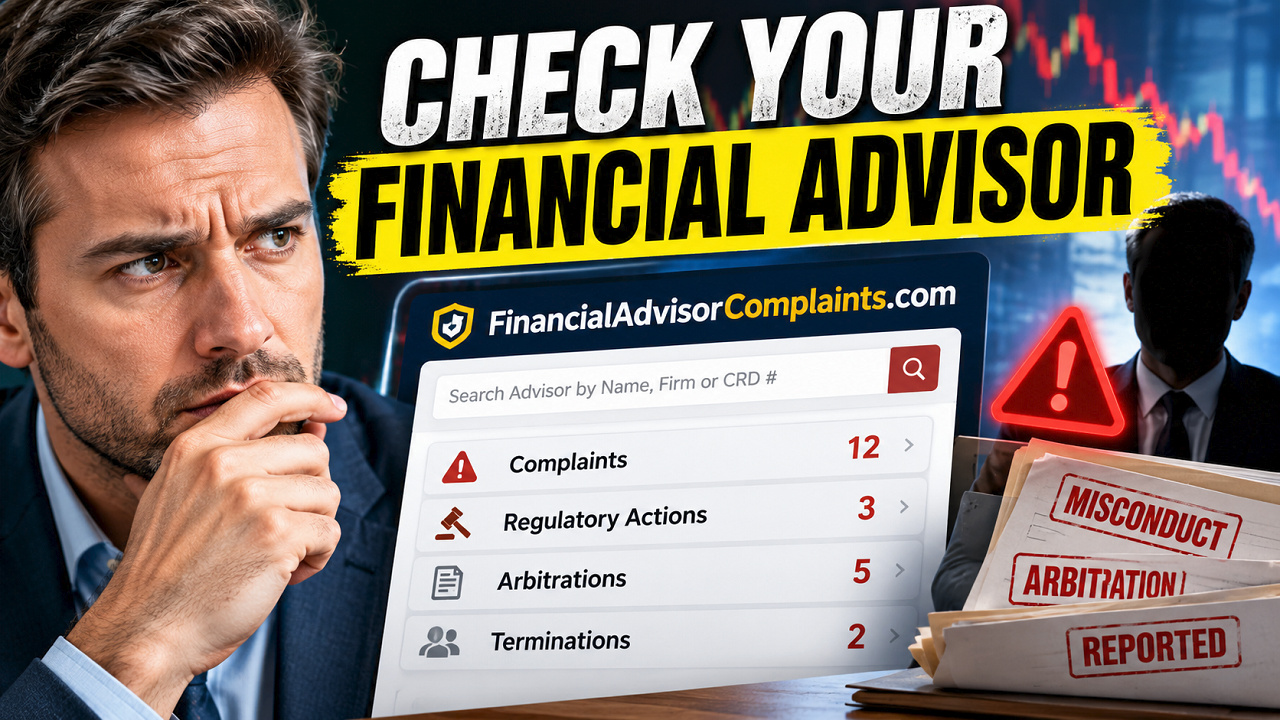
Learn how FinancialAdvisorComplaints.com helps investors research advisor complaints, regulatory records, disclosures, and due diligence before investing.
TL;DR: FinancialAdvisorComplaints.com is an investor research website focused on financial advisor complaints, regulatory disclosures, disciplinary events, and related developments. Its advisor search allows users to look up a professional by name, firm, or CRD number and review information before making an investment decision.
The important point is that a complaint or disclosure is not automatically proof of misconduct. FINRA explains that disclosure records can include customer complaints or arbitrations, regulatory actions, employment terminations, bankruptcies, and certain civil or criminal matters.
Investors should therefore treat complaint research as one part of broader due diligence. Compare information with FINRA BrokerCheck, SEC resources, state securities regulators, and the advisor’s own explanations. If you have a problem with an advisor, regulators including FINRA, the SEC, and state securities administrators may provide complaint channels depending on the circumstances.
Choosing someone to manage or advise on your investments involves more than checking credentials and listening to a polished sales pitch. A professional can have an impressive career history while still having disclosures that deserve a closer look.
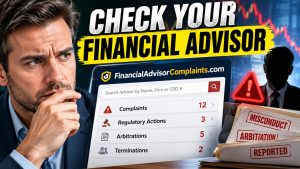
That is where FinancialAdvisorComplaints.com can become part of an investor’s research process. The website focuses on advisor complaints, regulatory developments, and investor education, while its search tool lets users investigate advisors by name, firm, or CRD number.
The goal should not be to label an advisor based on a single record. Instead, investors can use complaint information to identify questions that need answers before entrusting someone with their money.
Quick Answer: FinancialAdvisorComplaints.com is an investor information and research site covering financial advisor complaints, disciplinary matters, and related industry developments. Investors can use it to identify issues worth investigating, then verify important information through official sources such as FINRA BrokerCheck, SEC resources, and state regulators. A complaint is an allegation or disclosure, not necessarily a finding of wrongdoing.
What is FinancialAdvisorComplaints.com?
FinancialAdvisorComplaints.com is a website that publishes information about financial advisor complaints, regulatory actions, disciplinary matters, and investor-related developments, while providing an advisor search function based on an individual’s name, firm, or CRD number. Its stated purpose is to help investors research financial professionals and make more informed decisions.
How the Website Can Help Investors
The basic use case is straightforward: research first, invest second.
The site’s advisor search says users can search by advisor name, firm, or CRD number and review complaint history, regulatory actions, and disciplinary information.
For example, an investor considering an advisor could:
- Search the professional’s full name.
- Confirm the correct advisor using the CRD number and affiliated firm.
- Review reported complaints and other disclosures.
- Note the dates and nature of each event.
- Look for recurring allegations or similar events.
- Verify significant findings through official regulatory records.
- Ask the advisor or firm for an explanation where appropriate.
That last step matters. A disclosure can provide useful context, but it rarely tells the entire story by itself.
Key takeaway: Complaint research works best as a starting point for questions, not as a substitute for reviewing the underlying regulatory record.
How to Research a Financial Advisor
A thorough background check should involve more than one website.
Start with the advisor’s name, firm, CRD number, registration status, and employment history. Then examine disclosures and investigate anything that could materially affect your decision.
FINRA says BrokerCheck disclosures can include customer complaints or arbitrations, regulatory actions, employment terminations, bankruptcy filings, and certain civil or criminal proceedings.
The SEC also directs investors toward background-check resources for investment professionals. Its investor education office says Investor.gov provides tools for checking financial professionals and information designed to help investors avoid fraud.
A useful research checklist includes:
- Registration and licensing
- Current and previous firms
- Customer disputes
- Arbitration matters
- Regulatory actions
- Employment terminations
- Bankruptcy or financial disclosures
- Investment products recommended
- Compensation arrangements
- Conflicts of interest
- Whether the advisor acts as a broker, investment adviser, or both
Research rule: If a record raises a serious question, move from the summary to the underlying official disclosure before drawing a conclusion.
Understanding Complaint Records
Not every record means the same thing.
A customer complaint generally reflects an allegation or dispute involving a customer. An arbitration is a formal dispute-resolution proceeding. A regulatory action involves a regulator or self-regulatory organization. An employment termination can have many causes and should be read in context.
FINRA’s BrokerCheck materials explicitly group several different categories under disclosures, which is why simply counting the number of disclosures can produce a misleading picture.
| Record Type | What It Can Indicate | What Investors Should Check |
|---|---|---|
| Customer complaint | A customer alleged misconduct or harm | Allegation, date, resolution |
| Arbitration | A formal dispute was submitted to arbitration | Claims, parties, outcome |
| Regulatory action | A regulator took action | Rule involved, findings, sanctions |
| Employment termination | Advisor left or was discharged | Stated reason and circumstances |
| Bankruptcy | Financial distress or bankruptcy event | Date and relevant details |
| Civil proceeding | Certain court-related disclosures | Nature and disposition |
The distinction between allegation and finding is especially important. A pending dispute should not be described as established misconduct unless the record supports that conclusion.
Common Financial Advisor Allegations
Financial advisor complaints can involve a wide range of conduct. Some recurring allegations include:
- Unsuitable investment recommendations
- Misrepresentation or omission of material information
- Unauthorized trading
- Excessive or inappropriate trading
- Failure to follow client instructions
- Breach of fiduciary duty
- Excessive fees or undisclosed costs
- Conflicts of interest
- Inadequate supervision
- Problems involving complex investment products
The underlying issue can vary significantly from case to case. For example, a complaint about an unsuitable recommendation may concern whether an investment matched the customer’s objectives, financial situation, or risk tolerance.
Likewise, an allegation of unauthorized trading concerns a very different question from a complaint about poor investment performance.
Important distinction: Poor investment performance alone does not establish misconduct. Investors need to examine the specific allegation, evidence, applicable rules, and eventual disposition.
FinancialAdvisorComplaints.com vs FINRA BrokerCheck
The two resources can serve different purposes.
FinancialAdvisorComplaints.com presents investor-focused articles and research concerning advisor complaints and industry developments. FINRA BrokerCheck is an official FINRA resource containing registration and disclosure information governed by FINRA rules.
| Research Need | FinancialAdvisorComplaints.com | FINRA BrokerCheck |
|---|---|---|
| Advisor search | Yes | Yes |
| Complaint-related coverage | Yes | Yes |
| Regulatory disclosures | Discussed and reported | Official disclosure records |
| News and explanatory articles | Yes | Primarily regulatory records |
| CRD-based research | Yes | Yes |
| Primary verification | Useful starting point | Important official source |
FINRA also notes that state regulators may have public records containing information that is not available through BrokerCheck, including certain information no longer required to appear in federal or FINRA records.
That makes cross-checking particularly valuable.
How to File a Complaint
If an investor believes an advisor has acted improperly, the first step is usually to document the issue carefully.
NASAA recommends contacting the adviser directly when appropriate, keeping detailed notes, and escalating concerns to the branch manager or firm’s compliance officer. If the issue remains unresolved, an investor can contact the appropriate state regulator.
The SEC similarly advises investors to contact the broker or adviser, then the branch manager and compliance department where appropriate. It provides an online complaint process for issues involving investment accounts and financial professionals.
FINRA may also be relevant when the matter involves a broker or securities firm under its jurisdiction.
Keep copies of:
- Account statements
- Emails and letters
- Trade confirmations
- Agreements
- Notes from conversations
- Relevant transaction records
- Written explanations from the firm
Practical point: Documenting the issue early can make it much easier to explain what happened and what resolution you are seeking.
What Most People Misunderstand
One of the biggest mistakes in complaint research is treating every disclosure as if it represents the same level of wrongdoing.
It does not.
A pending customer allegation, a settled arbitration, a regulatory finding, and an employment termination are different events. Even within the same category, the facts can differ considerably.
Another mistake is relying exclusively on a third-party article. FinancialAdvisorComplaints.com can help investors discover relevant issues, but significant information should be checked against the underlying regulatory or public record.
FINRA itself explains that BrokerCheck information is primarily based on registration forms and that state regulators may maintain additional public records.
The best research process therefore looks something like this:
Discovery → Verification → Context → Questions → Decision
That approach reduces the risk of either ignoring a meaningful warning sign or unfairly judging someone based on an incomplete record.
People Also Ask
What does FinancialAdvisorComplaints.com provide?
It provides investor-focused information about financial advisor complaints, regulatory developments, disciplinary matters, and related industry issues. Its search tool allows users to look up advisors using a name, firm, or CRD number.
Does a financial advisor complaint prove misconduct?
No. A complaint may represent an allegation or dispute rather than an established finding. Investors should review the disposition, underlying records, and any regulatory findings before reaching conclusions.
Is FinancialAdvisorComplaints.com the same as FINRA BrokerCheck?
No. They are separate resources. FinancialAdvisorComplaints.com publishes investor-oriented content and research, while BrokerCheck is FINRA’s official system for registration and disclosure information concerning covered financial professionals and firms.
Where can investors file a complaint against an advisor?
Depending on the circumstances, investors may contact the advisor or firm’s compliance department, FINRA, the SEC, or their state securities regulator. NASAA recommends contacting the appropriate state regulator when an issue cannot be resolved through the firm.
What should investors check before hiring an advisor?
Review registration, employment history, disclosures, customer disputes, regulatory actions, compensation arrangements, conflicts of interest, and the advisor’s services. Cross-check important information through official regulatory resources.
FAQ
Can an investor rely only on complaint websites when choosing an advisor?
No. Complaint websites can be useful for discovery and context, but they should form only one part of due diligence. Investors should verify important information through official sources such as FINRA BrokerCheck, SEC resources, and applicable state regulators. The reason is simple: a summary may not contain every detail needed to understand a dispute. Investors should examine the date, allegation, status, resolution, and relevant parties. They should also consider information that does not involve complaints, including registration status, employment history, fees, conflicts, services offered, and investment strategy. A balanced review asks both what happened and what the record actually establishes.
How should an investor interpret several complaints against one advisor?
Multiple complaints deserve closer examination, but the number alone does not establish misconduct. Look for patterns in the allegations, dates, products involved, outcomes, and whether regulators took action. For example, five unrelated complaints with different allegations and different outcomes tell a different story from several complaints involving a similar product or alleged practice. Even then, investors should review the underlying records before making assumptions. The most useful question is not simply, “How many complaints are there?” It is, “What do the records show, and what happened in each matter?”
What is the difference between a complaint and a regulatory action?
A customer complaint generally represents an allegation or dispute raised by a customer. A regulatory action involves action by a regulatory authority or self-regulatory organization. They can lead to very different outcomes. A complaint might be denied, settled, withdrawn, or otherwise resolved without a finding of wrongdoing. A regulatory proceeding may result in findings, sanctions, restitution, suspension, or other consequences depending on the case. FINRA lists both customer disputes and regulatory actions among the categories that can appear as disclosures.
Should investors ask an advisor about a complaint?
Yes, asking for context can be useful. A professional may be able to explain what happened, whether the matter was resolved, and what the record means. Investors should compare that explanation with the underlying documentation rather than accepting either side automatically. Written records, regulatory filings, and formal dispositions can provide important context. The objective is not to conduct a courtroom-style investigation. It is to understand the information well enough to decide whether the advisor’s experience, services, conflicts, and approach are appropriate for the investor’s needs.
Financial advisor research is most useful when it goes beyond a simple complaint count. FinancialAdvisorComplaints.com can help investors identify issues, learn about advisor disputes, and discover questions worth investigating. Official sources such as FINRA, the SEC, and state securities regulators then provide an important verification layer.
The strongest due diligence process is neither blindly trusting an advisor nor automatically rejecting one because a disclosure appears. It is a careful review of the record, the allegation, the outcome, the surrounding facts, and the advisor’s current role.
For investors, that distinction matters. A disclosure is a reason to investigate, not necessarily a verdict.
Take the Next Step Before You Invest
Don’t wait until a financial problem becomes expensive to investigate the person managing your money. Do your research before you sign an agreement, transfer assets, or follow an investment recommendation.
Start by searching the advisor’s name, firm, or CRD number on FinancialAdvisorComplaints.com. Review any reported complaints or disclosures, note the issues that deserve a closer look, and then verify important details through official regulatory records such as FINRA BrokerCheck, SEC resources, and applicable state regulators.
If you find a complaint or disclosure, don’t jump to conclusions. Dig into the details. Check what was alleged, when it happened, how the matter was resolved, and whether a regulator made any findings. If something remains unclear, ask the advisor or firm’s compliance department for an explanation and compare that response with the available records.
Your investment decisions deserve more than a quick search and a sales presentation. Research the record, ask informed questions, verify the facts, and make your decision with the fullest information available.